 Image 1 of 6
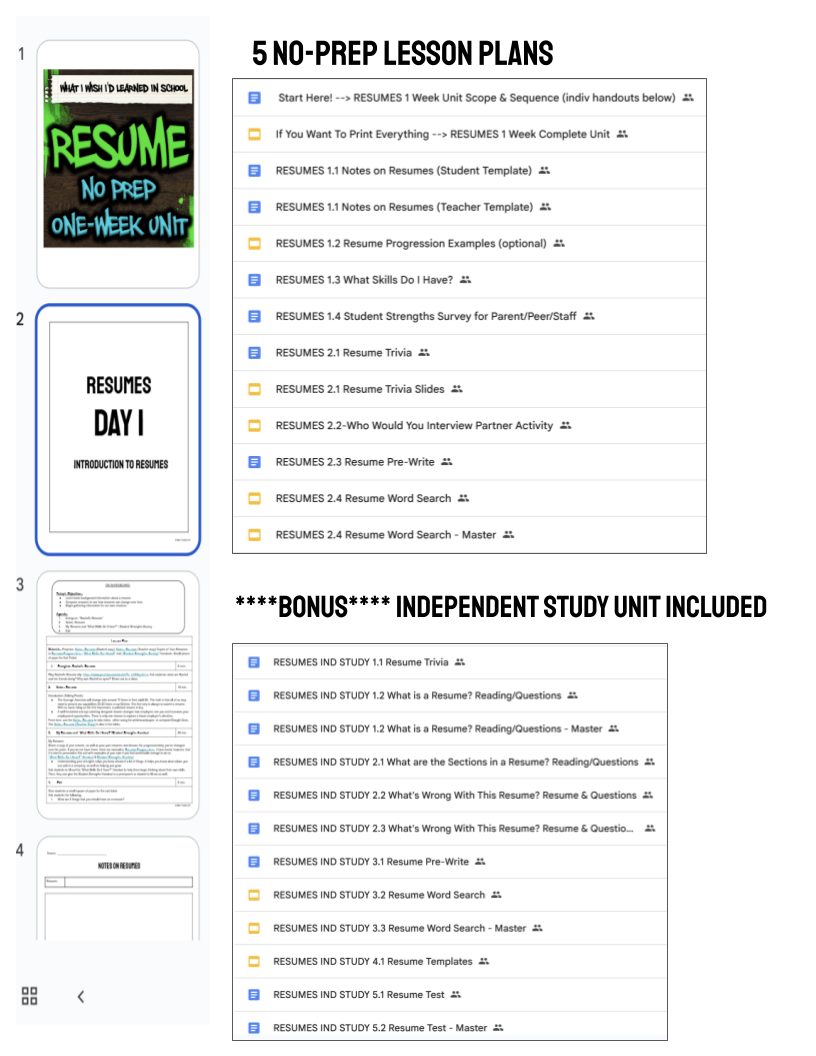 Image 2 of 6
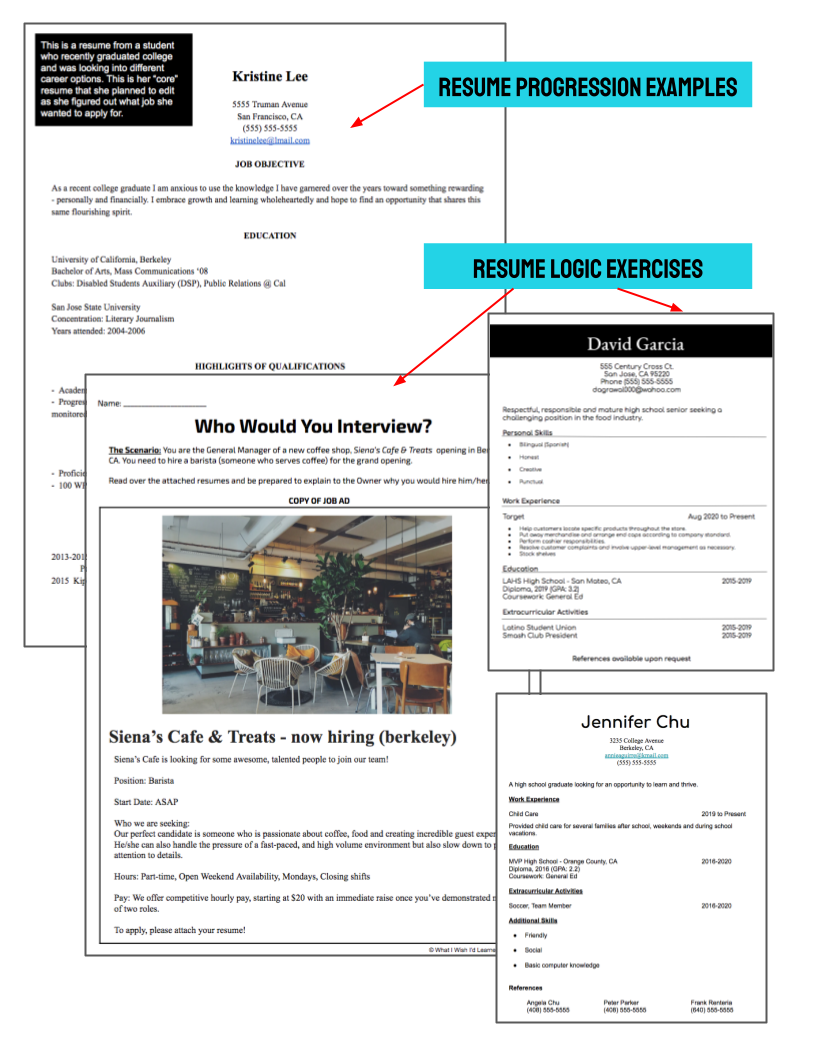 Image 3 of 6
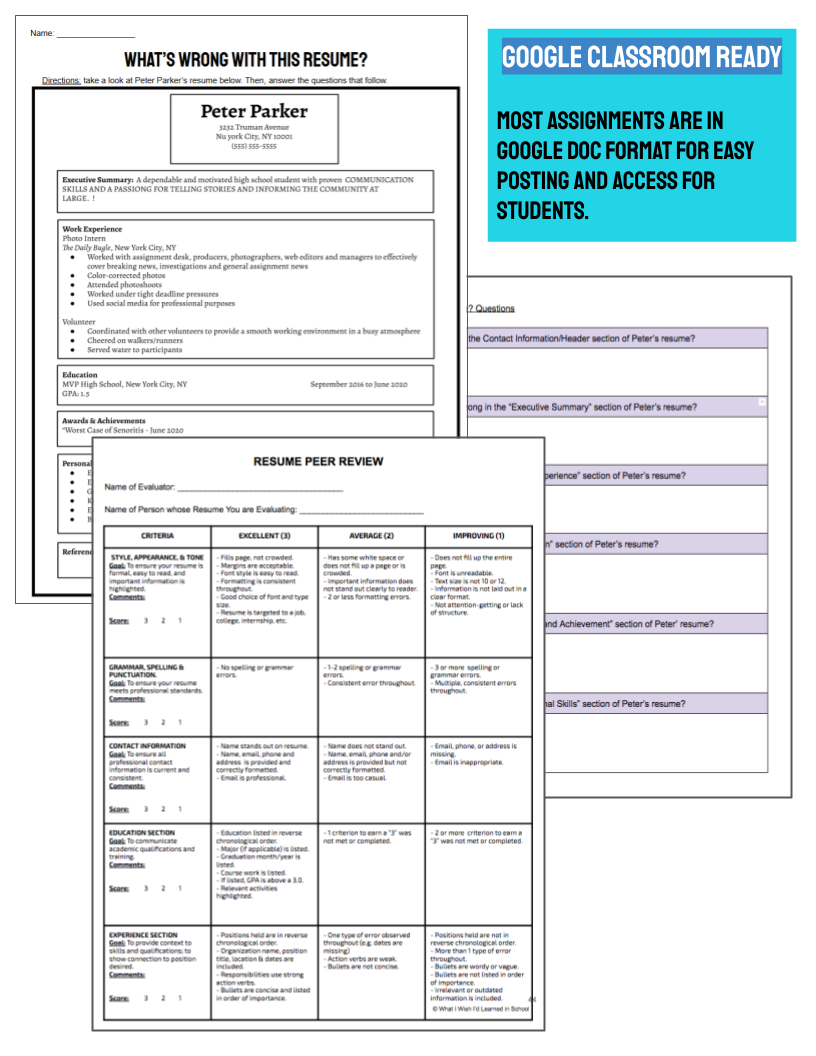 Image 4 of 6
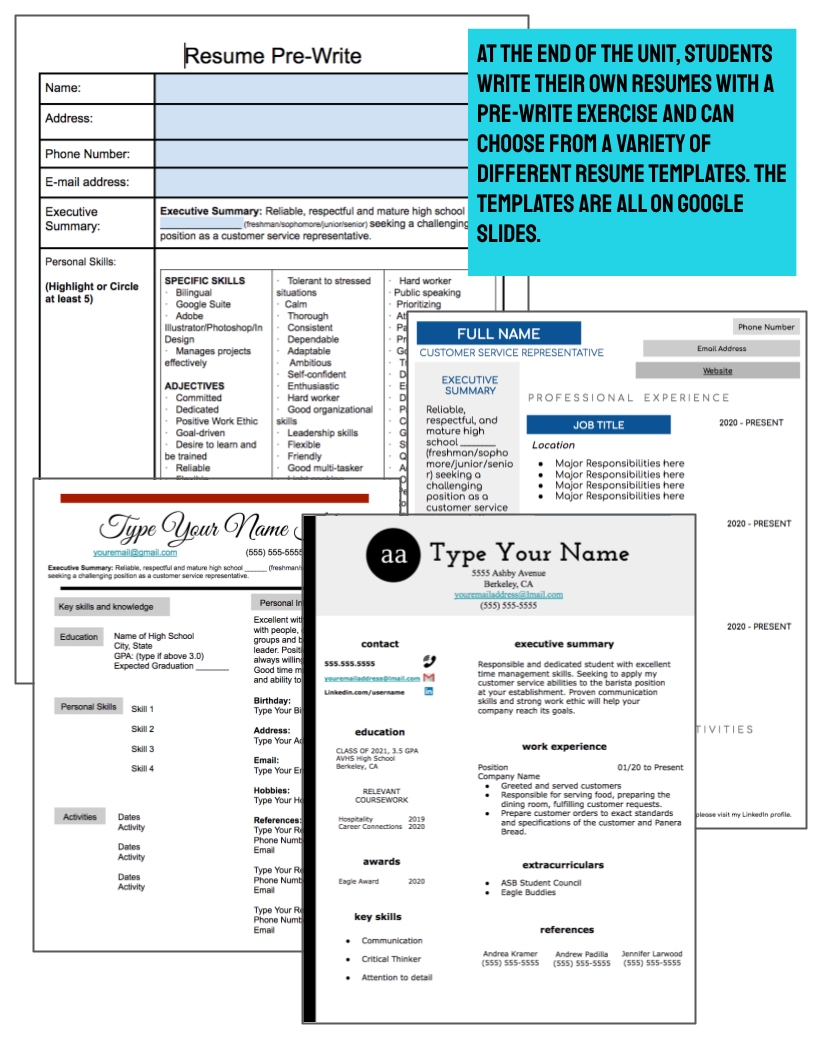 Image 5 of 6
 Image 6 of 6
Resume logic can build intention in the school year for students who struggle with motivation. This is a unit that I have taught for the last 10 years in my Basic English classes. I typically teach this in the sophomore year. There is nothing like seeing student's faces when the resume is printed on professional paper. We use this to guide our conversations around transition and update it often.
Included in the download:
- 1 Week Unit Plan
- If you want to print everything all at once --> 1 Week Unit Plan + All Worksheets
- BONUS: Independent Study 1 Week Unit
Day 1 - Introduction to Resumes
Students will:
Watch a short video clip (“Rachel’s Resume”) and discuss what happened and why resumes matter.
Learn basic information about resumes, including why they’re important and how they can change over time.
Take notes about resumes using paper or Google Docs.
Look at resume examples (including the teacher’s) to see how resumes grow and improve over the years.
Reflect on their own strengths by completing a “What Skills Do I Have?” handout.
Ask a peer, parent, or another student to help complete a Student Strengths Survey about them.
Show their understanding by answering an exit ticket question about key things that belong on a resume.
Day 2 - Information Gathering
Students will:
Complete a resume trivia warm-up to learn common facts and clear up myths about resumes.
Review the correct trivia answers and discuss why they matter.
Work with a partner to read a job posting, review multiple resumes, and decide who should be invited to an interview.
Participate in a class discussion explaining their interview choices.
Independently complete a resume pre-write to begin gathering personal information for their own resume.
Optionally complete a resume-themed word search for extra credit.
Day 3 - Create My Own Resume
Students will:
Participate in a short energizer discussion with a partner and the class.
Begin creating their own resume using a resume template and information from their pre-write.
Customize their resume by adding content, checking formatting, and making basic design choices.
Receive support and feedback from the teacher, paraeducator, or IA to fix grammar and formatting issues.
Review a sample resume (“Peter Parker’s Resume”) to identify common resume mistakes and discuss how to avoid them.
Print and save their completed resume for use in the next class session.
Day 4 - The Resume Game
Students will:
Work in small groups to play “The Resume Game.”
Review a realistic job ad and discuss what employers look for in strong candidates.
Collaborate to create a group resume that includes key sections (contact information, objective, skills, education, work experience, and hobbies).
Present their group resume to a student hiring committee.
Listen to other groups’ presentations and practice professional communication.
Serve on or interact with a hiring committee that evaluates resumes using hiring criteria and selects a candidate.
Reflect on the activity by completing an exit ticket.
Day 5 - Assessment
Students will:
Participate in a short energizer trivia activity using current events.
Complete a resume test to show what they’ve learned about resumes.
Peer review classmates’ resumes, giving feedback and suggestions using a review handout.
Finish or revise their own resumes based on feedback.
Complete an end-of-unit survey to reflect on the resume unit and provide feedback.
****BONUS**** Independent Study Unit!
Day 1 - Resume Trivia, What is a Resume? Reading/Questions
Day 2 - What are the Sections in a Resume? Reading/Questions, What's Wrong With This Resume? Resume & Questions
Day 3 - Resume Pre-Write, Resume Word Search
Day 4 - Resume Templates
Day 5 - Resume Test, Who Would You Interview?